



Blog


Prasanth Nittala

Trust is at its lowest level since 2016. As 89% of leaders agree that Digital Customer Experience (DCX) is essential, the 2026 Index uses real-world data to rank America's biggest brands across four critical pillars of reliability.
See which companies are leading the charge and which are lagging behind.
Explore the Digital Trust Index about Is your brand ready for the AI era?Reliable digital experiences lead to higher conversion rates and customer retention, turning technical performance into a measurable driver of profit.
With the average cost of a data breach reaching $4.88 million, maintaining proactive security is the only way to safeguard your reputation from sudden erosion.
As Discoverability becomes the new "front door," high scores ensure your content is surfaced by both traditional search engines and emerging Large Language Models (LLMs).
In a market where consumer confidence is at its lowest level since 2016, every reliable interaction reinforces a bond that is difficult for competitors to break.
Prioritizing accessibility prevents your brand from alienating the 27% of disabled consumers who abandon online purchases every month due to digital friction.
Because Google explicitly uses page performance as a primary ranking signal, a fast and reliable website is a prerequisite for maintaining organic search dominance.
The new frontier of trust. We measure how easily your content is surfaced by both traditional search engines and emerging Large Language Models.
Measuring speed and responsiveness. A high-performing site respects the user's time and is a key factor in Google rankings.
Evaluating browser-side protection. With the average data breach costing $4.88 million, proactive browser security is non-negotiable.
Ensuring usability for everyone. 95.9% of top homepages still have WCAG errors; the All-Stars fix them to broaden their reach.
The Reliability Score (R-Score) is a holistic benchmark that measures the effectiveness of a website across all four pillars: Discoverability, Performance, Security, and Accessibility.
Oshyn partners with some of the best brands and creative agencies in the world to create exceptional digital marketing solutions. By providing services, technology, and platforms we enable creative talent to focus on what they do best: create amazing work. We focus on three of the top DXP platforms available in the market:

.svg?width=2560&quality=75&format=pjpg&auto=webp)


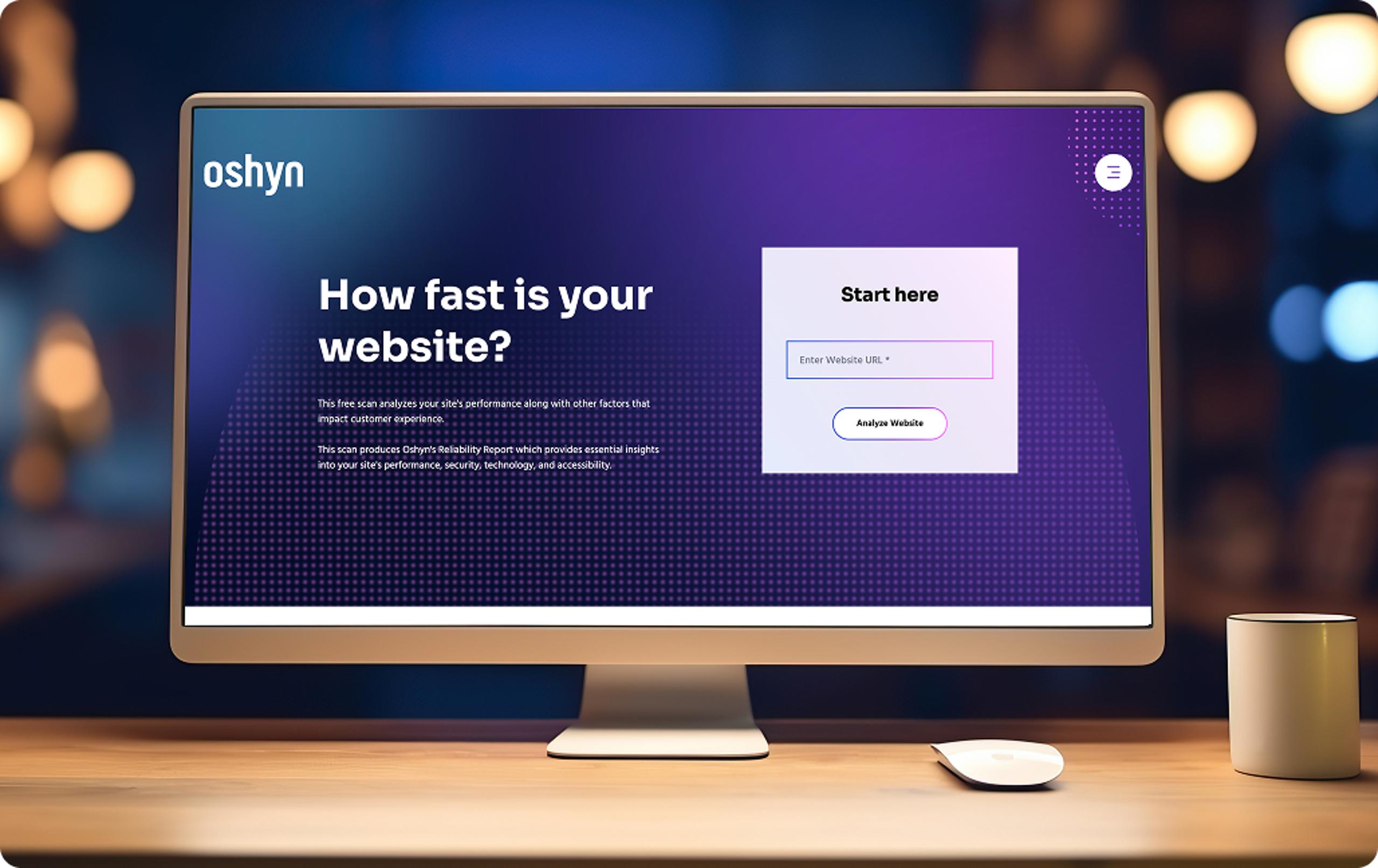
Ensure your website is high-performing and trustworthy with Oshyn’s free AI-enabled Reliability Report. This comprehensive report delivers the same deep technical insights that Oshyn used to create its prestigious Digital Trust Index.
Start Your ScanPrasanth Nittala

Yun Woo
Why Generative Engine Optimization Matters Now
The Index is an annual benchmarking series designed to recognize and celebrate the websites of America's biggest brands while providing standardized data on how organizations can build—or rebuild—consumer trust.
The Reliability Score (R-Score) is a holistic metric that represents a website’s overall effectiveness. It is calculated by scoring a site across four key pillars: Performance, Security, Accessibility, and Discoverability.
The Index currently focuses on America's biggest brands as benchmarked by the Fortune 1000. Rankings are only available for the websites that were scannable at the time the report was published. This allows us to benchmark the leaders of the global economy and identify industry-wide trends in digital reliability.
Anyone can generate a personalized R-Score by running Oshyn’s Reliability Report at oshyn.com, which provides an immediate diagnostic look at your site's Performance, Security, Accessibility, and Discoverability.
No. The R-Score is not static. While Oshyn publishes the rankings annually, the score itself fluctuates based on how often you update your website hardware, upgrade security protocols, or refine your user experience. This makes continuous monitoring essential.
Improvement requires a holistic approach: optimizing backend and frontend code for speed, addressing browser security flaws, fixing accessibility errors (like color contrast or alt text), and ensuring your content is structured for AI discoverability. Contact Oshyn if you’d like help improving your R-Score.
Whether you’re an established brand or rising through the ranks, we’ll help you identify—and fix—the specific friction points holding your digital trust back.


